
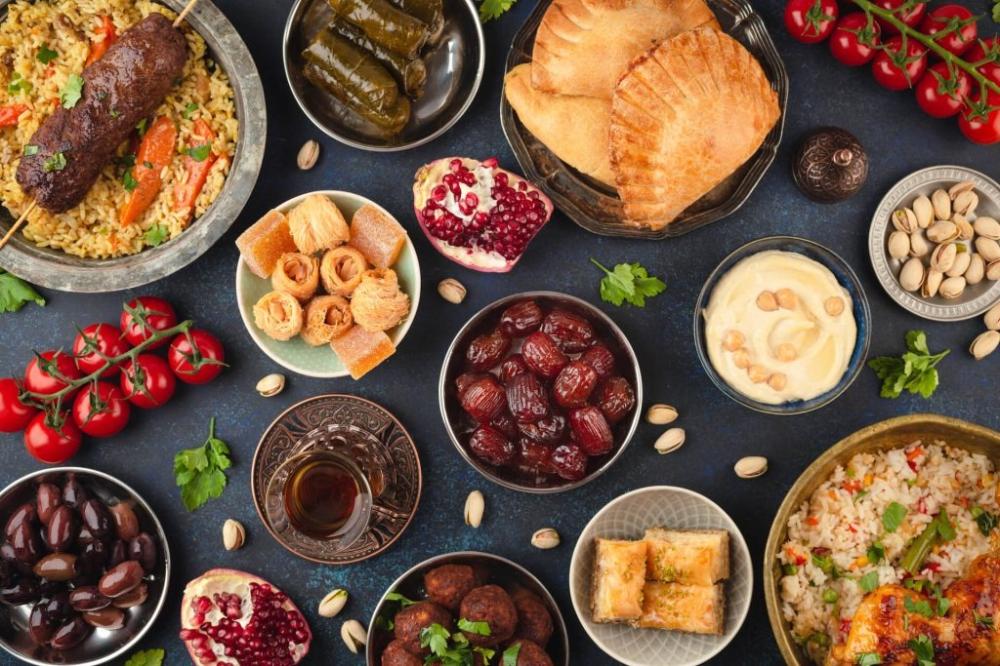
The month of Ramadan is the best start to a healthy life. It is a great opportunity to eat clean and healthy food that gives us energy for a long time, which in turn helps us go about our day normally without feeling tired and lethargic. Avoiding harmful foods contributes to reducing body weight, lowering blood pressure, controlling blood sugar levels and avoiding digestive problems that appear due to eating large amounts of food and unhealthy types of food.
Increase your protein intake:
Why is protein important in Ramadan?
Promotes satiety and reduces hunger
- Protein takes longer to digest than carbohydrates, which helps you feel full for longer, especially during fasting hours.
- Reduces the desire to eat fast food and high-calorie foods after breakfast.
Maintains muscle mass
- During weight loss, the body may lose some muscle mass if it does not get enough protein.
- Protein helps maintain muscle strength and prevents muscle loss during fasting.
Promotes fat burning
- The body requires more energy to digest protein compared to carbohydrates and fats, which helps boost metabolism and burn fat.
- It helps regulate blood sugar levels, which reduces fat storage.
Supports post-workout recovery
- For athletes and fasting people who exercise, protein is essential for repairing muscles and reducing the feeling of fatigue after exercise.
Healthy sources of protein in Ramadan:
At breakfast
- Lean meats : grilled chicken breast, lean meat, fish.
- Legumes : lentils, beans, chickpeas, fava beans.
- Dairy products : Greek yogurt, low-fat cheese, milk.
- Eggs : A rich source of high-quality protein.
In the suhoor meal
- Boiled eggs : give a feeling of satiety for a long time.
- Greek yogurt : rich in protein and easy to digest.
- Nuts and peanut butter : Provide the body with protein and healthy fats.
Protein-rich foods help you lose weight, boost your metabolism, and suppress your appetite. Make sure to eat chicken, beef, or fish for Iftar and focus on eggs for Suhoor. These are the best sources of quality protein.
Reduce your carbohydrate intake:
Carbohydrates are a major source of energy, but if you eat more than you need, they can be converted into stored fat, which hinders weight loss. In Ramadan, reducing carbohydrates helps burn fat more efficiently and prevents blood sugar levels from rising after breakfast.
Why should you reduce carbohydrates during Ramadan?
Stimulates fat burning : When you reduce carbohydrates, the body relies on stored fat as an energy source, which helps in losing weight.
Avoid high blood sugar : Foods rich in simple carbohydrates such as white bread and rice lead to a sudden rise in blood sugar, followed by a rapid drop that causes hunger and the desire to eat more food.
Reduce bloating and fluid retention : Reducing carbohydrates reduces water retention in the body, making you feel light and energetic.
Improve energy levels : Relying on fats and protein as energy sources helps avoid energy fluctuations caused by refined carbohydrates.
How to cut carbs without feeling hungry?
At breakfast
Avoid simple carbohydrates such as white bread, pasta, sweets, and sweetened drinks.
Replace it with complex carbohydrates such as:
- Oats
- Sweet Potato
- Quinoa
- brown rice
In the suhoor meal
Choose slow-absorbing carbohydrate sources such as:
- whole wheat bread
- Whole grains such as barley and oats
- Low-sugar fruits such as berries and avocados
Reduce your intake of Ramadan sweets such as luqaimat, muhalabiya, kunafa, etc. It does not mean that you should avoid eating Ramadan sweets completely, but you should reduce your intake if you want to lose fat in this month.
Avoid fruit juices and soft drinks:
Juices, even fresh juices, are high in sugar. One cup can contain 25 grams of sugar, which is equivalent to 5 teaspoons. 1 cup of fresh juice contains 120 calories.
Soft drinks contain more sugar. One soda contains about 32 grams, which is equivalent to 6 teaspoons. Many people drink diet sodas, which are best if consumed in moderation, twice a week. A better option is to switch to sparkling water.
Exercise:
When you are physically active, you burn more calories. Many people find Ramadan an excuse to stop exercising. A whole month without exercise can slow down your weight loss progress and lead to weight gain. Exercise at least 3 hours a week. You can do light cardio for an hour before Iftar, such as walking, cycling, or swimming. You should not do resistance exercises before Iftar, wait 3 hours after Iftar and then do resistance exercises.
Fortunately, Ramadan is an excellent opportunity to make dietary changes for many Muslims who want to lose weight and keep it off. Ramadan no It means more the weight or ill Nutrition on road Eat food High in Calories And fats And sugars. The solution. in amendment this The concept he that eat moderately And in quantities Calculated So that unless Increase more from Your need. On the contrary. month Ramadan he an opportunity for you To acquire Habits Healthy on road Fasting And eating Moderate And stay away on Sugars Fried foods. Fasting. an opportunity for us I earn health Best fl Get lost This is amazing The opportunity.
If you need help with your Ramadan diet and exercise program, you can visit our website and choose the trainer and nutritionists you would like to subscribe to from here.